
Introduction
Eye surgery has come a long way from where it started, and the pace of improvement in just the last decade has been genuinely significant. Better lasers, smarter imaging, and more personalized planning have made procedures like LASIK and cataract surgery safer, faster, and more precise than ever. Looking at what’s actually changed helps explain why so many patients today have a much smoother experience than earlier generations did.
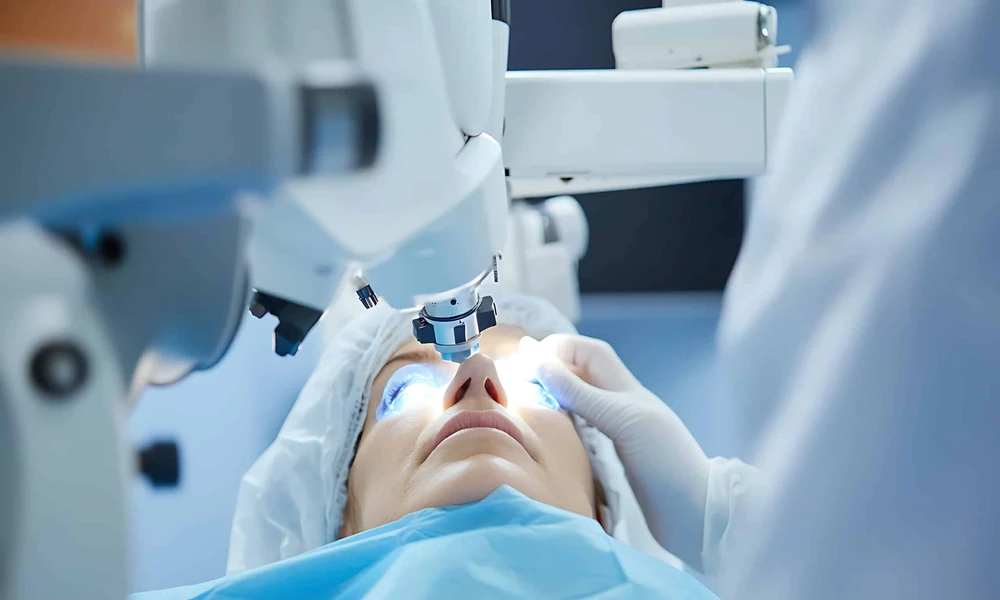
Modern developments in ophthalmology are giving patients access to increasingly precise approaches to vision correction and eye treatment. advanced eye surgery can incorporate technologies such as laser-assisted procedures, detailed eye mapping, and computerized tracking to help surgeons plan and perform treatments with greater accuracy. These innovations can also support more individualized care by allowing treatment strategies to be adapted to a patient’s specific eye structure and needs. As surgical technology continues to evolve, patients can discuss these options with their eye-care specialist to understand which approaches may be appropriate for them.
Bladeless Techniques Have Replaced Older Methods
LASIK used to rely on a mechanical blade to create the corneal flap, a step that carried more variability and risk than today’s approach. Modern procedures now use femtosecond lasers to create that flap instead, producing a far more precise and consistent result. This shift alone has made the procedure safer and expanded who’s actually eligible, including patients with thinner or slightly irregular corneas who wouldn’t have qualified before.
Personalized 3D Mapping Is Changing Precision
Newer platforms now build a detailed 3D digital model of a patient’s eye using well over a hundred thousand individual data points, allowing treatment to be customized down to a level that simply wasn’t possible with older, more generalized approaches. That level of personalization has been shown to improve visual outcomes compared to previous techniques, giving patients results tailored specifically to their own eye structure.
Real-Time Tracking Adds a Layer of Safety
Modern laser systems include automated eye-tracking that follows even small, involuntary eye movements during the procedure and adjusts in real time. If the eye moves outside an acceptable range, the system automatically pauses the laser, which significantly reduces the risk of an inaccurate treatment and adds a meaningful safety net that older systems didn’t have.
Cataract Surgery Has Also Seen Major Progress
It’s not just LASIK that’s improved. Cataract surgery, once associated with a long and uncomfortable recovery, now involves refined techniques and tools that allow most patients to bounce back with far less downtime and fewer restrictions than in years past. These improvements have made a procedure many people used to delay out of fear feel like a much more routine, manageable experience.
Artificial Intelligence Is Starting to Play a Role
AI-assisted planning and diagnostic tools are increasingly being integrated into surgical platforms, helping detect conditions like glaucoma and diabetic retinopathy earlier and supporting more precise treatment planning. While this technology is still evolving, it points toward a future where surgical decisions are informed by even more detailed, individualized data than what’s already in use today.
Conclusion
The combination of bladeless techniques, personalized digital mapping, and real-time safety tracking has genuinely transformed what patients can expect from eye surgery today. Procedures that once carried more uncertainty and longer recovery times are now faster, safer, and tailored to each individual eye. For anyone considering vision correction or cataract treatment, it’s worth having a conversation with an eye surgeon about just how far these techniques have advanced in recent years.

Comments are closed.